


It’s an honor for us, Atmosphere!
When it comes to sustainability, probably nothing is discussed as intensely and heatedly as the topic of CO₂. For us, there’s no doubt: greenhouse gases are the main cause of global warming, which in turn causes Arctic ice to melt, destroys unique ecosystems, and shifts entire climate zones—to name just a few of the dramatic consequences. Reduce, reduce, reduce… must therefore be the motto, but unfortunately, you often have to look closely, because CO₂ traps lurk practically everywhere: Whether it’s raw material procurement, production, supply chains, packaging, or disposal—across the entire product lifecycle, the CO₂ footprint can be larger, smaller, or, at best, nonexistent.

Measures to reduce our site-related emissions
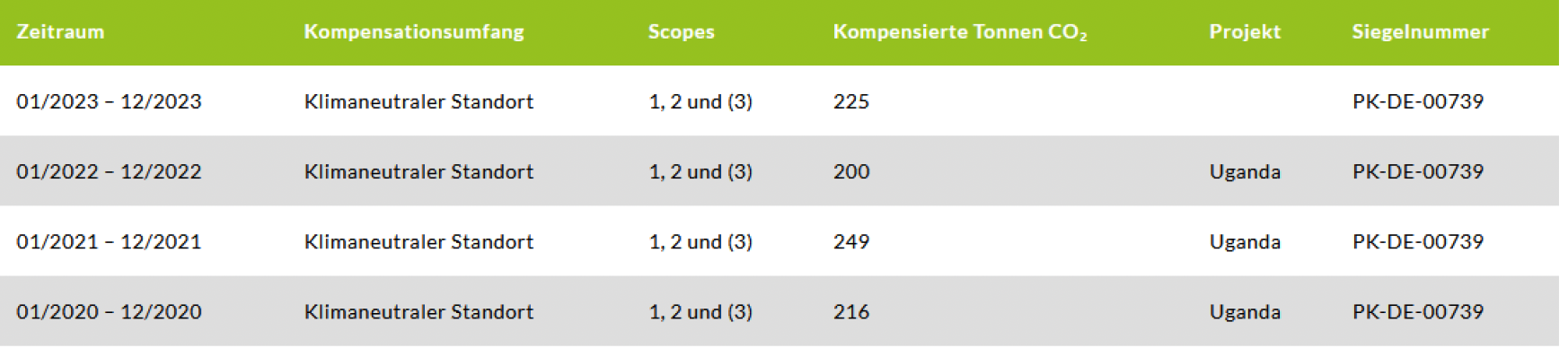
We’ve already taken a number of steps to minimize the amount of harmful greenhouse gases we release into the atmosphere. That’s why we’ve been sourcing our electricity from renewable energy sources since 2005 and have been operating our own photovoltaic system since 2009. The combined heat and power (CHP) plant we installed in 2016 also helps us use energy efficiently. Nevertheless, not everything can be avoided, and there’s still a net impact. That’s why we’ve been working with PRIMAKLIMA e.V. since 2002, which supports global reforestation as Support climate protection projects . To ensure these claims remain verifiable, PRIMAKLIMA issues certificates that document these efforts. We have held the “climate-neutral site” seal (offset of Scope 1 and 2 emissions) since 2020. To achieve this, we track all emissions generated directly at the site or indirectly caused by energy consumption at the site. Specifically, this includes emissions resulting from heating the production site, generating process heat, and fuel consumption by the company’s vehicle fleet.

Wichtige Fakten
PRIMAKLIMA-Kooperation seit: 2002
CO2-Emissionen in Tonnen seit Beginn der Kooperation: 1080
Kompensationsumfang: Scopes 1, 2 und (3)
Siegelnummer: PK-DE-00739
In addition, we offset selected Scope 3 emissions, such as fuel- and energy-related emissions that are not included in Scope 1 and 2. This also includes CO2 emissions generated by the disposal of waste at our facilities (Scope 3.5). We also factor in business travel by train and car, as well as employees’ commutes to work, when calculating offsets (Scope 3.6 and 3.7). Even the emissions resulting from the use of copy paper within the company are quantified (Scope 3.1).
Not included in the assessment are upstream and downstream processes, i.e., raw materials and all transportation to retailers. Our assessment is a corporate carbon footprint (CCF). Once we have tallied all of this, we offset the emissions by supporting these climate projects.
Reforestation for the climate

More than just planting trees.
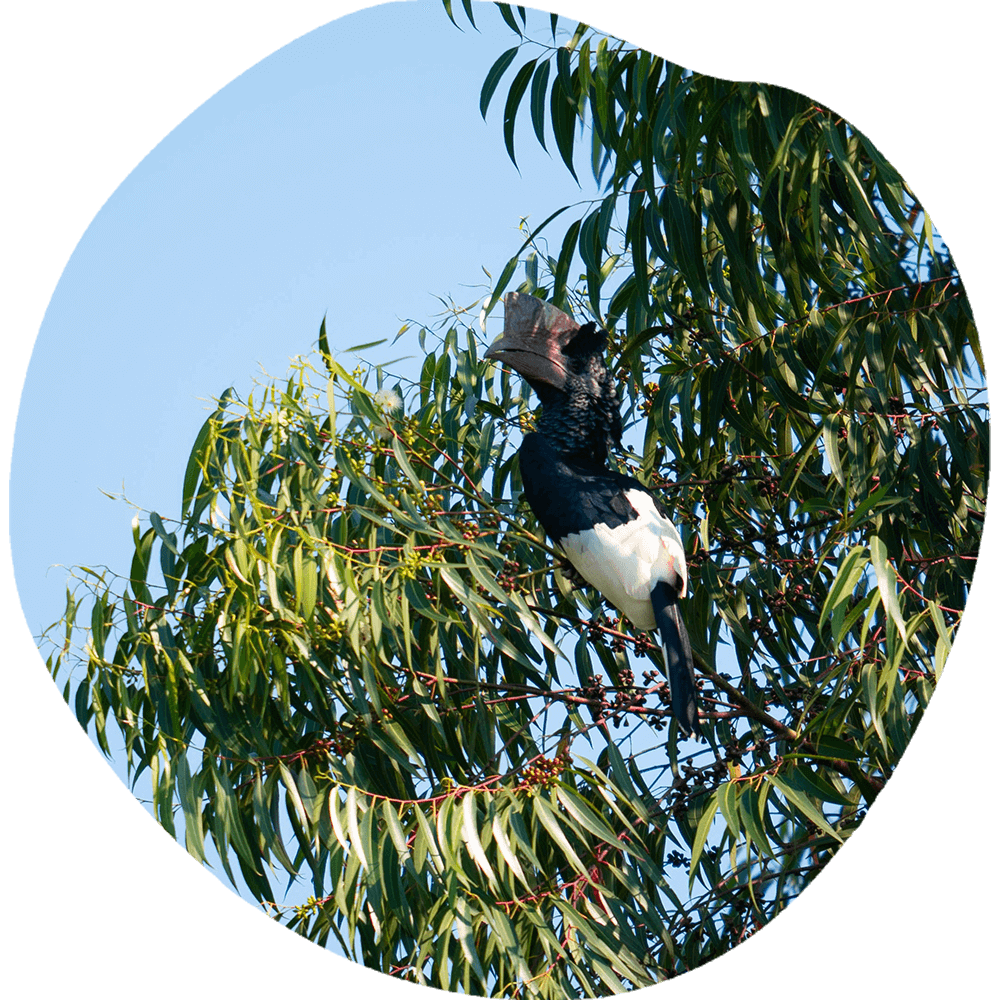
Primaklima also collaborates with organizations that validate and verify the projects. You can find more information hereSince 2020, we have been supporting a reforestation project in Kibale National Park in western Uganda, which has already enabled the sequestration of 665 metric tons of CO2 . Kibale National Park is a true biodiversity hotspot: In addition to the world’s largest chimpanzee population, countless other animal and plant species worthy of protection live here. Reforestation efforts are necessary to preserve this valuable natural reserve.

Protecting Tropical Forests
An entire ecosystem depends on reforestation. The restoration and conservation of one of the country’s last remaining tropical forests in Kibale National Park is far more than just planting trees.
It’s about protecting the habitat of numerous native animals, such as chimpanzees, wildcats, and 320 different bird species, whose populations are not only recovering but steadily growing. There are now once again over 359 tree species in this park.
But the local people also benefit from this: 27 communities border the national park. For the population, this means many different employment opportunities and a secure source of income.
Avoiding Emissions.
For us, climate protection is primarily about avoiding emissions and offsetting those that are still unavoidable. That is why we are constantly working to optimize our processes. To this end, we define goals that are established during regular meetings.
The CSE (Certified Sustainable Economics) sustainability management system is used to systematically track measures and goals aimed at improving processes and implementing the standard’s requirements. Compliance with the standard’s requirements is validated and certified annually through audits.
What we have achieved so far.
- We purchase 100% green electricity from Green Planet Energy
- Since 2011, we have been generating CO2-neutral electricity with our own 58.8 kWp PV system.
- Since 2016, we have been operating a 20 kW combined heat and power (CHP) plant that is heat-optimized and simultaneously produces electricity for use on-site.
- We purchase ProWindgas from Green Planet Energy for the CHP plant and the heating systems. In 2022, 15.5% of the gas mix consisted of renewable gases. This represents a savings of approximately 14 metric tons of CO2e. Green Planet aims to offer climate-neutral gas by 2027.
- Conversion of lighting to LED throughout the company.
- More than 90% of the plastic bottles are made of HD-PE monomaterial and 100% recycled plastic.
- Labels used on plastic bottles are made of pure PE. Labels used on paper packaging are made of paper. As a result, bottles and labels are fully recyclable and can thus be reintroduced into the recycling loop.
- The use of bag-in-box packaging saves between 80 and 85% in plastic and CO2 emissions during transport.
- Refillable bottles and the bag-in-box system help reduce packaging waste.
- The copy paper is made from 100% recycled paper fibers, produced with very low energy and water consumption, without chlorine bleaching or optical brighteners.
- Outgoing invoices are created and sent digitally.
- At least 80% of outer packaging is made from recycled paper. The majority of this packaging contains more than 90% recycled material.
- Packaging is subject to a continuous optimization process.
- In-house production of soaps using a low-temperature process.
- The vegetable oils used are 100% organically grown.
- We use validated and certified raw materials in accordance with NCP and NCS standards.
- Concentrated products reduce CO2 emissions associated with transportation and packaging materials.
- We prioritize short supply chains: Regional suppliers are given preference under similar conditions.
- Suppliers are also selected based on sustainability criteria.
- Travel policy for employees (minimizing air travel, prioritizing rail travel)
- 100% of company vehicles have been converted to electric mobility.
- Company bicycle program
- 100% green electricity for electric cars and e-bikes
- Support for agriculture fit for our grandchildren


